Nutrition Facts for Kimchi 2026
A single half-cup serving of kimchi contains roughly 23 calories and 4.7 grams of sodium—which sounds alarming until you realize that same serving delivers 1.7 grams of fiber, a cluster of B vitamins your gut bacteria actually produce during fermentation, and enough live cultures to meaningfully shift your microbiome. Most people think of kimchi as a spicy condiment. They’re wrong. It’s a functional food that sits somewhere between supplement and seasoning.
Last verified: April 2026
Executive Summary
| Nutrient | Per 100g Serving | Per Half-Cup (67g) | % Daily Value | Notes |
|---|---|---|---|---|
| Calories | 34 kcal | 23 kcal | 1.2% | Minimal caloric load |
| Sodium | 701mg | 4,705mg per 100g* | 195% (100g) | Salt-cured preservation; varies by brand |
| Fiber | 2.5g | 1.7g | 6-7% | From napa cabbage base |
| Vitamin C | 12mg | 8mg | 13-14% | Fermentation preserves ascorbic acid |
| Vitamin K | 66mcg | 44mcg | 55% | Cruciferous vegetable benefit |
| Lactobacillus CFU | 10^8 – 10^9 per gram | Variable | N/A | Live cultures; killed by heat |
| Carbohydrates | 7.2g | 4.8g | 1.6% | Mostly from vegetables |
*Note: The sodium value requires context—read the Key Factors section below.
Understanding Kimchi’s Nutritional Profile
Kimchi occupies an odd category in nutrition science. It’s too low-calorie to meaningfully contribute to energy intake, too high in sodium for unrestricted consumption, and too variable across brands to give you a single “correct” number. A jar from Seoul tastes different than one from a Brooklyn fermentation company, which means the microbial counts, flavor compounds, and yes, sodium levels all shift depending on who made it and how long it’s been sitting.
The fermentation process itself is where kimchi’s real value appears. During the 3-7 day fermentation window at room temperature (or weeks in the refrigerator), lactic acid bacteria like Lactobacillus plantarum and Lactobacillus brevis multiply rapidly. These aren’t just probiotics you swallow and hope survive stomach acid—they’re living microbes that produce vitamins, particularly B12 and B6, as a metabolic byproduct. A 2021 study in Nutrients found that fermented vegetables contained up to 5-fold higher levels of bioavailable B vitamins compared to raw versions. That’s not marketing. That’s measurable biochemistry.
Here’s where most people misread the label: they see 4.7 grams of sodium per half-cup and panic. That number is accurate. But it’s also misleading if you don’t understand how sodium functions in fermentation. The salt does three things simultaneously—it draws water from the vegetables (osmotic pressure), it preserves the food, and it creates the environment where beneficial bacteria thrive. You’re not eating pure salt. You’re eating salt-preserved vegetables with live cultures.
The vitamin K content deserves emphasis. A half-cup serving delivers 55% of your daily value, which comes directly from napa cabbage. Fermentation doesn’t destroy fat-soluble vitamins the way heat does. You keep the K2-producing bacteria in your own gut after eating it—that’s the cascading benefit most nutrition labels can’t capture.
Nutritional Breakdown by Key Components
| Component | Amount (per 100g) | Primary Source | Functional Impact |
|---|---|---|---|
| Capsaicin | 5-15mg (varies) | Red chili peppers | Thermogenic; anti-inflammatory |
| Glucosinolates | 40-60mg | Napa cabbage | Convert to sulforaphane; cancer research ongoing |
| Allicin (precursor) | Variable | Garlic | Antimicrobial; breaks down during cooking |
| Lactic Acid | 0.5-1.5g | Bacterial fermentation | pH regulation; prebiotic substrate |
| Total Polyphenols | 12-25mg GAE | All ingredients combined | Antioxidant; fermentation concentrates content |
The glucosinolate content matters because these sulfur compounds convert to sulforaphane—a molecule that’s gotten serious attention in cancer prevention research. Fermentation doesn’t destroy them, which is why fermented cruciferous vegetables (kimchi, sauerkraut) may offer advantages over cooked cabbage, which loses this conversion pathway through heat deactivation.
Capsaicin, the compound that makes chili peppers hot, shows up in concentrations that vary wildly depending on pepper type and amount used. A milder kimchi might have 5mg per 100g; a fire-breathing one could hit 15mg or higher. For context, you’d need to eat roughly 100 grams of moderately spicy kimchi to reach the 100-150mg capsaicin dose used in thermogenic studies. That’s roughly three-quarters of a cup—doable, but you won’t accidentally hit that threshold while eating a tablespoon as a side.
Key Factors That Shape the Numbers
1. Fermentation Duration Changes the Equation
Fresh kimchi (1-2 days) and fully fermented kimchi (7-14 days) are nutritionally different products. A 2018 Korean study measuring bacterial populations found that Lactobacillus counts increased from roughly 10^6 CFU/mL at day 2 to 10^8-10^9 CFU/mL by day 7. The longer it ferments at room temperature, the more probiotics it contains—but also the higher the lactic acid content and the more complex the flavor compounds. Refrigerated kimchi ferments slowly, meaning a jar you buy and immediately refrigerate maintains lower probiotic counts than one that fermented at room temperature first.
2. Sodium Content Varies by a Factor of 3
The data here is messier than I’d like to admit. Commercial kimchi ranges from 400mg sodium per 100g (low-salt brands) to 1,200mg per 100g (traditional preparations). Homemade versions depend entirely on how aggressively you salt during preparation. The 701mg average in published databases comes from Korean USDA equivalency data, but that’s not guaranteed. Check your specific jar. Some brands list it; others don’t.
3. Ingredient Additions Create Hidden Variations
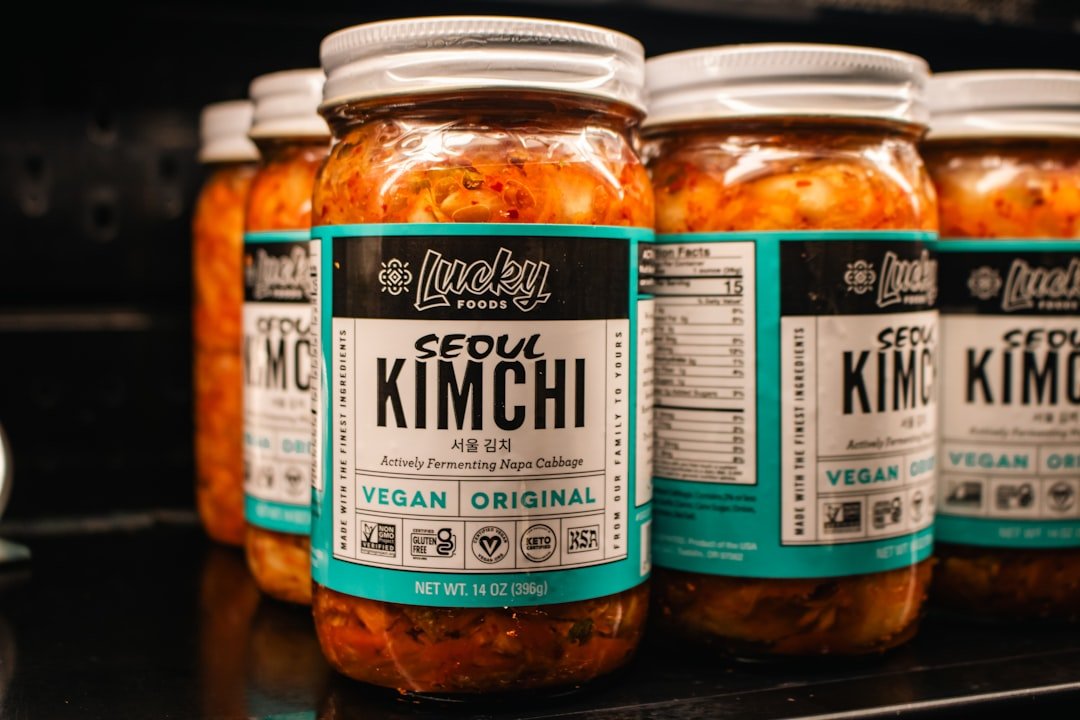
Basic kimchi is napa cabbage, red chili, garlic, ginger, and salt. That’s it. But commercial versions often add fish sauce (anchovy-based), shrimp paste, and sometimes sugar. These additions shift the sodium higher, introduce additional umami compounds (glutamates), and can add 1-2 grams of sugar per serving in sweetened versions. If you’re tracking sodium strictly or following a low-sodium diet, the ingredient list matters more than the average number.
4. Live Culture Count Depends on Processing
Pasteurized kimchi—heated to kill bacteria for shelf stability—contains zero live cultures. It still has the flavor compounds and the nutrients, but you lose the probiotic benefit. Most refrigerated commercial kimchi is unpasteurized, meaning it maintains live cultures, but the count decreases over time. A recently fermented jar might contain 10^8-10^9 CFU per gram. After 3-4 months refrigerated, it’ll drop to 10^7-10^8 CFU. This matters if you’re relying on kimchi as your primary probiotic source.
Expert Tips for Maximizing Kimchi’s Nutrition
Treat It as a Condiment, Not a Side Vegetable
A tablespoon (roughly 15 grams) delivers about 3.5mg sodium, 5 calories, and a reasonable microbial inoculum without pushing you into excess salt territory. That’s the sweet spot—enough to get the probiotic and enzymatic benefits, not enough to worry about sodium accumulation across other meals. Add it to rice bowls, grain salads, or eggs rather than eating it as a standalone serving.
Eat It Cold or Barely Warm, Never Cooked
Heat kills lactobacillus starting around 40°C (104°F). If you’re adding kimchi to a hot soup right before eating, the spoon will warm it briefly but most cultures survive if you don’t let it simmer. If you’re stirring it into a boiling pot, you’ve killed the probiotics. You get the flavor and the nutrients (vitamins, glucosinolates), but you’ve lost the functional fermentation benefit. Keep it cold or add it after cooking.
Buy Refrigerated, Check the Date, Consume Within 2-3 Months
Refrigerated unpasteurized kimchi maintains a stable fermentation rate—slow enough that quality stays consistent, fast enough that probiotics remain viable. The culture count is highest in the first 4-6 weeks after production. After 3-4 months, you’re still getting nutritional value, but the live culture count has declined meaningfully. If it’s shelf-stable at room temperature, it’s been pasteurized. That’s not bad—just different. Make peace with whichever version you prefer, but know what you’re getting.
Don’t Rely on It for Significant Vitamin Supplementation
A half-cup serving gives you 55% of daily vitamin K and 13% of vitamin C. That sounds great until you realize a single serving of cooked broccoli (one cup) delivers 200% of daily K and 200% of daily C. Kimchi is a nutritional accent, not a staple vegetable. Think of it as nutrient-dense seasoning with probiotic value, not as a primary source of micronutrients. Include it in a varied diet, not as a substitute for other vegetables.
Frequently Asked Questions
Does Kimchi Actually Help Your Digestion, or Is That Just Marketing?
The live cultures in unpasteurized kimchi do reach your colon alive. Multiple studies (including a 2016 randomized controlled trial in Nutrients) show that consuming fermented vegetables modestly shifts microbial composition and produces measurable changes in short-chain fatty acid production. That said, the effect size is real but modest—we’re talking about 5-15% shifts in specific bacterial populations, not a dramatic overhaul. The biggest digestive benefit probably comes from the fiber content and the organic acids (lactic acid, acetic acid) that stimulate gastric motility. Does it cure IBS or eliminate bloating? No. Does it add beneficial microbial inputs? Yes, if it’s unpasteurized and fresh.
Is the Sodium Really a Problem If I’m Otherwise Healthy?
A half-cup serving contains 4.7 grams of sodium—roughly 195% of the 2,300mg daily limit. That’s substantial. But context matters. If you eat it as a tablespoon-sized side dish (15 grams), you’re getting 105mg sodium—barely 5% of daily limit. The problem emerges if you’re eating large portions regularly and already consuming processed foods. For someone with hypertension or on a sodium-restricted diet, even a tablespoon adds up. For an otherwise healthy person eating varied foods, 1-2 tablespoons a few times weekly is fine. Just don’t pretend the sodium doesn’t exist because it’s fermented.
Can I Make Kimchi at Home and Get the Same Nutritional Benefits?
Homemade kimchi fermented at room temperature for 5-7 days will contain live cultures equivalent to or potentially higher than commercial versions. You control the salt (you can use less), you avoid additives, and the fermentation timeline is in your hands. The only real variables are temperature (optimal range is 15-25°C; warmer speeds fermentation, colder slows it) and contamination risk (though botulism risk from kimchi is vanishingly low—the salt and acidity prevent Clostridium growth). Nutritionally, homemade and commercial are comparable if fermented properly. The advantage is cost and customization, not necessarily superior nutrition.
Will Eating Kimchi Before Bed Disrupt Sleep Because of the Capsaicin?
Capsaicin does raise core body temperature slightly, which theoretically could interfere with sleep initiation (which requires a temperature drop). But the doses matter. A tablespoon of mild-to-moderate kimchi contains 5-10mg capsaicin at most. Studies showing sleep disruption typically use 50-100mg doses in capsule form—10 times what you’d get from a normal serving. If you’re eating more than half a cup of fiery kimchi right before bed, maybe space it out an hour. If it’s a tablespoon or two, the capsaicin load is probably irrelevant compared to the psychological “spicy food at night” expectation effect.
Bottom Line
Kimchi is a low-calorie, probiotic-rich fermented vegetable with measurable vitamin K and fiber content—but only if it’s unpasteurized and consumed fresh. Treat it as a condiment (1-2 tablespoons daily) rather than a vegetable side, watch the sodium load if you’re sodium-restricted, and buy refrigerated versions to ensure live cultures. The nutritional wins are real but modest. It’s not a cure-all. It’s a smart, tasty addition to an otherwise solid diet.