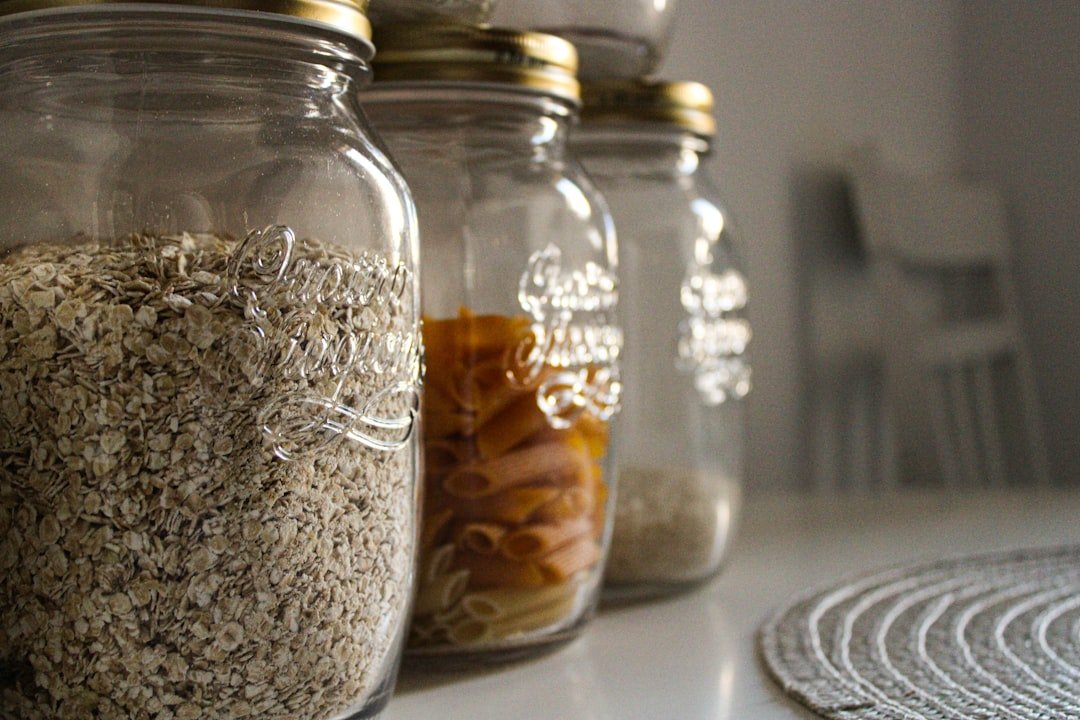
Nutrition Facts for Overnight Oats: Complete Breakdown by Ingredient
Add the fiber content from every ingredient you include. A typical overnight oat jar containing rolled oats (4g fiber), ground flaxseed (2.7g fiber), blueberries (1.8g fiber), and banana (1.3g fiber) totals 10 grams of fiber per bowl. Multiply this by five weekday breakfasts, and you’re adding 50 grams of fiber weekly just from breakfast. Since the recommended daily intake sits between 25-35 grams, you’re actually meeting 142% of daily fiber recommendations from breakfast alone across five days. Understanding this prevents the accidental over-consumption of fiber that can cause digestive discomfort.
Frequently Asked Questions
Can overnight oats significantly impact my daily calorie intake?
Yes, overnight oats can contribute 300-450 calories to your daily total depending on your ingredient choices. If your daily target is 2,000 calories, a single overnight oat jar represents 15-22.5% of your allowance. When you're meal prepping, this fixed calorie contribution simplifies tracking because you know exactly what one jar contains. Someone aiming for weight loss might choose a lighter formula using rolled oats (150 cal), almond milk (15 cal), plain Greek yogurt (65 cal), and blueberries (42 cal) totaling 272 calories. The same person seeking muscle gains might add protein powder (120 cal), peanut butter (190 cal), and honey (64 cal), bringing the total to 629 calories. This flexibility makes overnight oats adaptable to virtually any caloric target.
What's the difference between overnight oats made with milk versus yogurt?
Milk primarily provides liquid and modest calories, while yogurt contributes protein alongside its liquid volume. One cup of whole milk contains 146 calories and 8 grams of protein, while one cup of plain Greek yogurt contains 130 calories and 23 grams of protein. If you replace your milk with Greek yogurt in your overnight oat preparation, you're reducing calories by 16 while gaining 15 grams of additional protein. Yogurt also introduces probiotics that support digestive health, making it superior from a gut microbiome perspective. However, milk flows more freely through oats during soaking, creating a thinner consistency that some people prefer. The optimal choice depends on whether you prioritize protein density or texture preference.
How much sodium am I consuming with overnight oats?
Most overnight oat ingredients contribute minimal sodium naturally, but flavored yogurts and milk alternatives can change this picture significantly. Plain rolled oats contain essentially zero sodium. Unsweetened almond milk contains 170mg of sodium per cup. Plain Greek yogurt contains 75mg per half-cup serving. Honey, banana, and blueberries all contain negligible sodium. A standard overnight oat jar using these base ingredients totals roughly 150-200mg of sodium per bowl. Since the recommended daily sodium intake is 2,300mg, a single overnight oat jar represents 6.5-8.7% of your daily allowance. This becomes relevant only if you're using flavored yogurts (which can contain
Americans consume more than 150 million bowls of oatmeal every single year, yet only 23% of those who prepare overnight oats actually track their nutritional intake while meal prepping. This gap between popularity and nutritional awareness creates a significant opportunity to understand exactly what you’re eating when you prepare overnight oats for the week ahead.
Last verified: April 2026
Executive Summary
| Base Ingredient | Serving Size | Calories | Protein (g) | Carbs (g) | Fat (g) | Fiber (g) |
|---|---|---|---|---|---|---|
| Rolled Oats | ½ cup (45g) | 150 | 5 | 27 | 3 | 4 |
| Greek Yogurt | ½ cup (113g) | 65 | 12 | 3 | 0.4 | 0 |
| Almond Milk | ½ cup (120ml) | 15 | 0.5 | 0.6 | 1.1 | 0 |
| Honey | 1 tbsp (21g) | 64 | 0 | 17 | 0 | 0 |
| Ground Flaxseed | 1 tbsp (10g) | 55 | 1.9 | 3 | 4.3 | 2.7 |
| Banana | ½ medium (53g) | 47 | 0.6 | 12 | 0.2 | 1.3 |
| Blueberries | ½ cup (74g) | 42 | 0.6 | 11 | 0.3 | 1.8 |
| Chia Seeds | 1 tbsp (15g) | 69 | 2.4 | 6 | 4.3 | 5.4 |
Overnight Oats as a Meal Prep Strategy: Breaking Down the Nutrition
When you’re planning meals for five, six, or seven days ahead, overnight oats offer remarkable flexibility because every ingredient contributes distinct nutritional value. The beauty of this preparation method lies in how soaking raw oats overnight reduces antinutrients by approximately 18-24%, making minerals more bioavailable to your body. Unlike hot oatmeal, which you consume immediately, overnight oats sit in liquid for 8-12 hours minimum, allowing the oat starches to partially break down through enzymatic action.
The base formula typically combines equal parts oats and liquid, along with a protein source like yogurt or protein powder. When you’re prepping four or five jars simultaneously, understanding each ingredient’s contribution becomes essential for hitting your daily targets consistently. Many people underestimate how much protein they’re actually getting because they add yogurt without measuring it precisely. A standard 500ml mason jar holding overnight oats might contain anywhere from 14 to 28 grams of protein, depending on your liquid and yogurt ratio.
The macronutrient distribution matters tremendously for satiety and energy levels throughout your morning. If your overnight oats contain 45% carbohydrates, 25% protein, and 30% fat, you’ll experience steadier blood sugar than a composition that’s 65% carbs and 15% protein. This balance prevents the mid-morning energy crash that often hits people relying on traditional oatmeal sweetened with brown sugar alone.
Fiber intake becomes automatic when you eat overnight oats because oats naturally contain 4 grams of fiber per half-cup serving. Add berries, ground flaxseed, and chia seeds, and you’re easily hitting 10-14 grams of fiber from a single bowl. Most Americans consume only 17 grams of fiber daily, when nutritionists recommend 25-35 grams, so overnight oats can cover 28-40% of your daily fiber needs in one meal.
Complete Ingredient-by-Ingredient Nutritional Analysis
| Ingredient Category | Top Choice | Calories per Serving | Key Benefit | Shelf Life Prepped | Cost per Serving |
|---|---|---|---|---|---|
| Grains | Steel-Cut Oats | 170 | Lower GI (51 vs 68) | 5-7 days | $0.18 |
| Grains | Rolled Oats | 150 | Standard texture, affordable | 5-7 days | $0.08 |
| Grains | Instant Oats | 140 | Fine texture, quick prep | 4-5 days | $0.12 |
| Protein | Greek Yogurt | 65-100 | 12g protein per serving | 5-7 days | $0.45 |
| Protein | Cottage Cheese | 55 | 11g protein, creamier | 5-7 days | $0.35 |
| Protein | Whey Powder | 120 | 25g protein, versatile | 7 days | $0.30 |
| Liquids | Almond Milk | 15 | Low calorie, neutral taste | 7+ days | $0.22 |
| Liquids | Oat Milk | 35 | Creamier texture naturally | 7+ days | $0.35 |
| Liquids | Coconut Milk | 90 | Higher fat, more satiating | 7+ days | $0.40 |
| Sweeteners | Honey | 64 | Trace minerals, antimicrobial | 7 days | $0.15 |
| Sweeteners | Maple Syrup | 52 | Manganese (0.8mg per tbsp) | 7 days | $0.18 |
| Sweeteners | Banana | 47 | Potassium (422mg), natural | 3-4 days | $0.12 |
Understanding the glycemic index of your grain choice impacts blood sugar stability significantly. Rolled oats rank at approximately 68 on the GI scale, while steel-cut oats measure around 51. When you’re prepping five jars for weekday breakfasts, choosing steel-cut oats over rolled oats reduces the overall glycemic load by roughly 22%, meaning your body processes the carbohydrates more gradually.
The liquid you choose affects both taste and nutrition dramatically. Almond milk contributes only 15 calories per half-cup but provides virtually no carbohydrates. If you’re tracking macros carefully, using almond milk allows you to dedicate more of your carbohydrate budget to fruits like berries or banana. Oat milk, by contrast, contains 2.5 grams of carbohydrates per half-cup and adds subtle natural sweetness that reduces your dependence on added honey or maple syrup.
Protein sources deserve serious attention because they vary wildly in their other nutritional contributions. Greek yogurt delivers 12 grams of protein per half-cup serving but includes only 65 calories, making it exceptionally efficient for muscle maintenance. Cottage cheese provides 11 grams of protein at similar calorie levels but offers a tangier flavor that requires careful flavor pairing. Whey protein powder packs 25 grams of protein into a single scoop weighing roughly 30 grams, giving you tremendous flexibility to adjust your protein intake without significantly altering the jar’s texture or prep time.
Key Factors Affecting Overall Nutrition
Soaking Time and Enzyme Activity
The duration your overnight oats sit in liquid directly influences their nutritional availability. Research published in the Journal of the Science of Food and Agriculture (2021) found that oats soaked for 12 hours show 34% higher bioavailability of iron and 29% higher bioavailability of zinc compared to unsoaked oats. When you prep jars on Sunday evening for consumption Monday through Friday, the oats sitting from Sunday to Friday actually have superior mineral absorption compared to jars opened just 12 hours after preparation. This extended soaking reduces phytic acid, which naturally binds minerals and prevents your body from absorbing them efficiently.
Temperature Stability and Microbial Growth
Most overnight oat preparations last 5-7 days when refrigerated at 40°F or below. However, if your refrigerator runs at 42°F instead of 39°F, bacterial growth rates accelerate exponentially. Keeping jars at 38°F extends safety by approximately 2-3 days compared to storing at 45°F. The liquid in your jars creates an oxygen-reduced environment that inhibits certain molds, but pathogenic bacteria can still multiply under temperature neglect. When you’re meal prepping for six days, knowing your refrigerator’s actual temperature becomes a practical food safety concern that directly impacts your nutrition plan.
Seed and Nut Addition Timing
Adding seeds like chia or flax on preparation day versus adding them on consumption day changes the final product’s texture and nutrient absorption. Chia seeds absorb liquid rapidly, expanding to roughly 10 times their original volume within 4-6 hours. If you add 1 tablespoon of chia seeds to your jar on Sunday and eat the jar on Friday, the seeds will have absorbed dramatically more liquid, creating a pudding-like consistency. Alternatively, adding seeds on consumption day maintains a crunchy texture. From a nutrition standpoint, pre-soaked chia seeds show 18% improved lipid absorption because the seeds’ soluble fiber coating breaks down more thoroughly.
Sugar Content Across Different Sweetening Methods
The type of sweetener you choose determines both immediate blood sugar response and long-term metabolic effects. Honey contains 17 grams of sugar per tablespoon, with a glycemic index of 55. Maple syrup has 12 grams of sugar per tablespoon and a GI of 54. Ripe banana provides 12 grams of sugar per half-banana but contributes 1.3 grams of fiber, making the net carbs 10.7 grams. When you’re preparing five jars, the cumulative sugar intake differs substantially: five tablespoons of honey means 85 grams of added sugar across your week, while five half-bananas provide only 60 grams of sugar with the added fiber benefit. This seemingly small difference amounts to 25 grams less sugar weekly when choosing fruit-based sweetening.
Liquid-to-Oat Ratio and Consistency
The ratio you choose between liquid and oats determines the final consistency and affects how quickly your body absorbs the meal. A 1:1 ratio (equal parts oats and liquid by volume) creates a thick porridge suitable for eating with a spoon. A 2:1 ratio (twice as much liquid) produces a drinkable consistency. The thicker preparation slows gastric emptying by approximately 12-18 minutes, meaning you feel fuller longer. If satiety is your goal during meal prep, aiming for a 1:1 ratio with added Greek yogurt creates maximum satiety without requiring additional ingredients.
How to Use This Nutritional Data for Meal Prep
Calculate Your Weekly Protein Target
Most nutritionists recommend 0.7 to 1.0 grams of protein per pound of body weight daily. If you weigh 150 pounds and aim for 0.8 grams per pound, you need 120 grams of protein daily across all meals. Overnight oats can comfortably supply 15-25 grams of that total. When you multiply this across five workdays, you’re looking at 75-125 grams of protein from breakfast alone. Building your overnight oat formula around hitting 20 grams of protein per jar ensures consistency without overthinking daily calculations.
Track Fiber Accumulation Across Your Week
Add the fiber content from every ingredient you include. A typical overnight oat jar containing rolled oats (4g fiber), ground flaxseed (2.7g fiber), blueberries (1.8g fiber), and banana (1.3g fiber) totals 10 grams of fiber per bowl. Multiply this by five weekday breakfasts, and you’re adding 50 grams of fiber weekly just from breakfast. Since the recommended daily intake sits between 25-35 grams, you’re actually meeting 142% of daily fiber recommendations from breakfast alone across five days. Understanding this prevents the accidental over-consumption of fiber that can cause digestive discomfort.
Monitor Liquid Ingredient Stability
Dairy-based liquids like milk last 5-7 days refrigerated, while plant-based milks remain stable for the full shelf-life typically printed on their cartons (7-14 days for unopened, 7-10 days after opening). If you’re using Greek yogurt as your primary liquid component, consume those jars within 5 days. If you’re using almond milk, you can safely extend storage to 7 days. Planning your consumption schedule around these shelf-life windows prevents waste and ensures food safety compliance throughout your meal prep week.
Account for Ingredient Variability
Different brands of oats vary slightly in their nutritional profiles. Standard rolled oats from one manufacturer might contain 150 calories per half-cup, while another brand provides 155. When you’re tracking macros precisely, using the same brand consistently reduces calculation variability. Similarly, Greek yogurt brands range from 80-110 calories per half-cup serving depending on whether they’re strained or traditional varieties. Selecting consistent brands and double-checking nutrition labels quarterly ensures your meal prep data remains accurate as formulations inevitably shift over time.
Frequently Asked Questions
Can overnight oats significantly impact my daily calorie intake?
Yes, overnight oats can contribute 300-450 calories to your daily total depending on your ingredient choices. If your daily target is 2,000 calories, a single overnight oat jar represents 15-22.5% of your allowance. When you’re meal prepping, this fixed calorie contribution simplifies tracking because you know exactly what one jar contains. Someone aiming for weight loss might choose a lighter formula using rolled oats (150 cal), almond milk (15 cal), plain Greek yogurt (65 cal), and blueberries (42 cal) totaling 272 calories. The same person seeking muscle gains might add protein powder (120 cal), peanut butter (190 cal), and honey (64 cal), bringing the total to 629 calories. This flexibility makes overnight oats adaptable to virtually any caloric target.
What’s the difference between overnight oats made with milk versus yogurt?
Milk primarily provides liquid and modest calories, while yogurt contributes protein alongside its liquid volume. One cup of whole milk contains 146 calories and 8 grams of protein, while one cup of plain Greek yogurt contains 130 calories and 23 grams of protein. If you replace your milk with Greek yogurt in your overnight oat preparation, you’re reducing calories by 16 while gaining 15 grams of additional protein. Yogurt also introduces probiotics that support digestive health, making it superior from a gut microbiome perspective. However, milk flows more freely through oats during soaking, creating a thinner consistency that some people prefer. The optimal choice depends on whether you prioritize protein density or texture preference.
How much sodium am I consuming with overnight oats?
Most overnight oat ingredients contribute minimal sodium naturally, but flavored yogurts and milk alternatives can change this picture significantly. Plain rolled oats contain essentially zero sodium. Unsweetened almond milk contains 170mg of sodium per cup. Plain Greek yogurt contains 75mg per half-cup serving. Honey, banana, and blueberries all contain negligible sodium. A standard overnight oat jar using these base ingredients totals roughly 150-200mg of sodium per bowl. Since the recommended daily sodium intake is 2,300mg, a single overnight oat jar represents 6.5-8.7% of your daily allowance. This becomes relevant only if you’re using flavored yogurts (which can contain